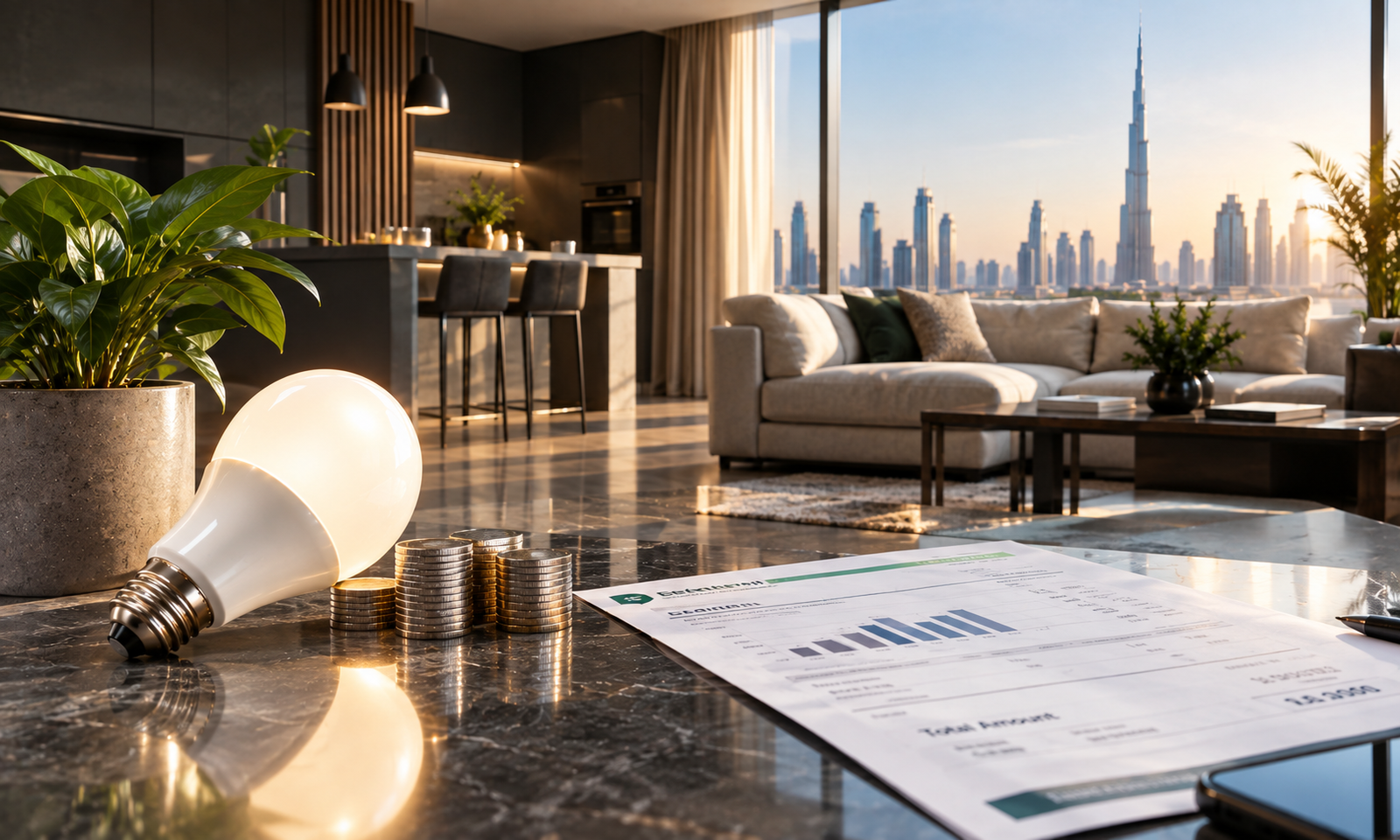

High electricity bills are a common concern for households and businesses across the UAE, particularly during the hotter months when air conditioning systems can operate for long periods.
However, reducing your electricity bill does not necessarily mean using less comfort or changing your lifestyle. In many cases, the biggest opportunities come from improving how energy is managed, maintaining equipment properly, reducing unnecessary consumption, and understanding which systems are responsible for the highest energy demand.
From optimising your air conditioner and improving insulation to choosing efficient appliances, monitoring consumption, and considering solar energy, there are several practical ways to reduce electricity costs without making major changes to your daily routine and help to reduce your energy bill in uae.
Why Are Electricity Bills High in the UAE?
The UAE’s hot climate means that cooling can represent a significant portion of electricity consumption, particularly during summer.
Air conditioners may operate for extended periods to maintain comfortable indoor temperatures. However, cooling is not the only contributor to a high electricity bill.
Water heaters, refrigerators, lighting, pumps, kitchen appliances, electronics, commercial equipment, motors and other electrical systems can all contribute to total consumption.
The condition of the building also matters. Poor insulation, heat entering through windows and roofs, air leakage, inefficient equipment and unnecessary operating hours can increase electricity consumption.
This means that the most effective way to reduce an electricity bill is not simply to switch everything off. It is to understand where electricity is being consumed and whether that energy is being used efficiently.
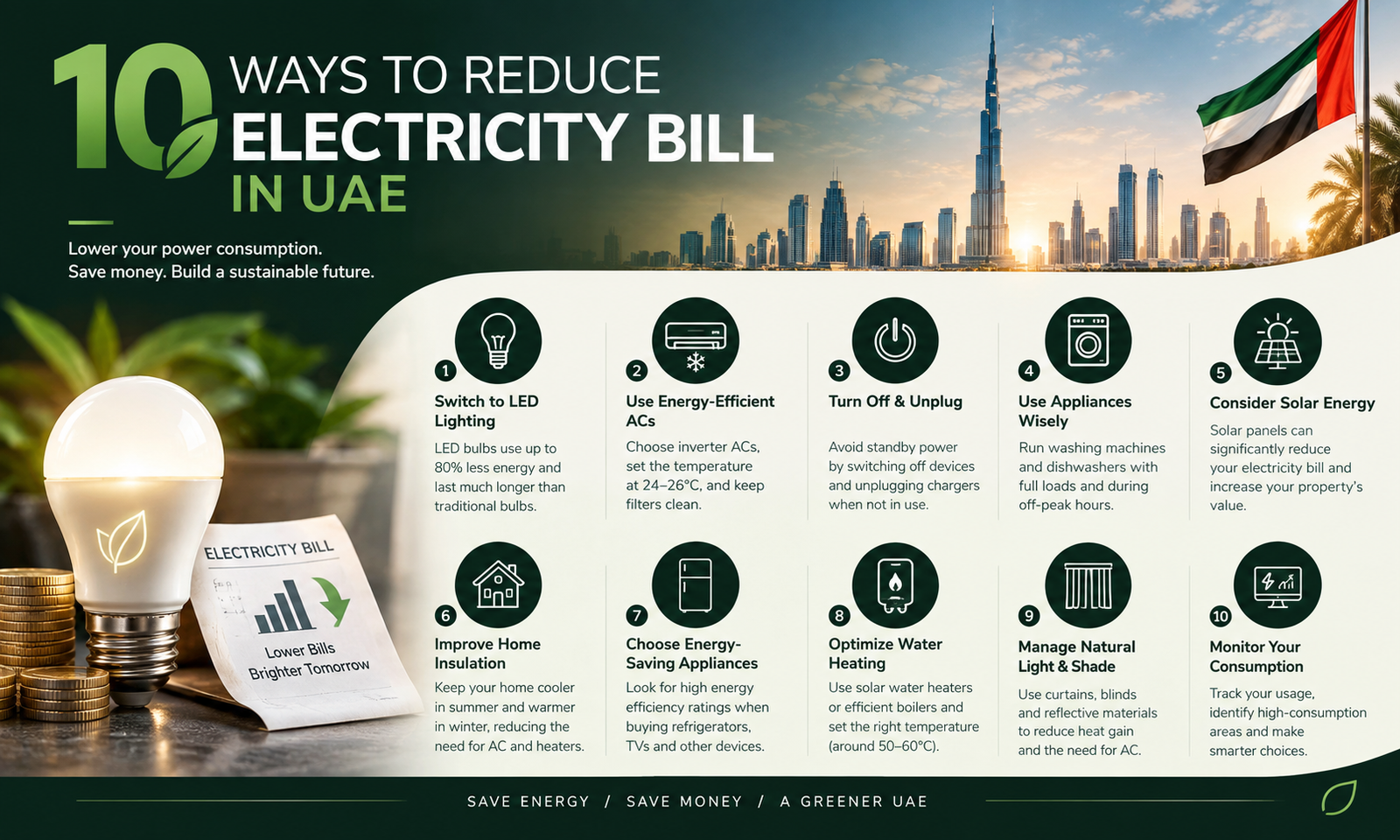
10 Practical Ways to Reduce Your Electricity Bill
Optimise Your Air-Conditioning Temperature
Air conditioning is one of the most important areas to consider when trying to reduce electricity consumption in the UAE.
Setting your thermostat to 24°C or higher, where comfortable, can help reduce unnecessary cooling demand. Maintaining an excessively low indoor temperature requires the cooling system to operate for longer and remove more heat from the space.
The ideal temperature ultimately depends on the building, humidity, occupancy and individual comfort preferences. The objective is not to make your home or workplace uncomfortable, but to avoid unnecessary overcooling.
For commercial and larger properties, optimisation can go beyond the thermostat. HVAC operating schedules, controls, airflow, equipment efficiency and cooling loads should also be considered.
Maintain Your Air-Conditioning System
An air conditioner that is not properly maintained may consume more electricity while providing less effective cooling.
Dirty filters can restrict airflow, while dirty coils, mechanical problems, poor airflow and other issues can affect system performance.
Regular maintenance helps keep HVAC systems operating closer to their intended performance.
For larger properties, maintenance should ideally be combined with performance monitoring. If an HVAC system is consuming significantly more electricity than expected, the problem may not be solved simply by replacing filters.
A professional assessment can help determine whether equipment, controls, operating schedules or the building itself are contributing to excessive cooling demand.
Improve Insulation and Reduce Heat Gain
Reducing the amount of heat entering your property can reduce the amount of cooling required.
In the UAE, heat can enter buildings through roofs, walls, windows, doors and other parts of the building envelope. Direct sunlight through windows can also increase indoor heat gain.
Practical measures may include:
-
Improving thermal insulation
-
Sealing gaps around doors and windows
-
Using curtains and blinds
-
Installing suitable shading
-
Improving window performance
-
Reducing unnecessary solar heat gain
The principle is straightforward:
The less heat entering a building, the less work the air-conditioning system needs to do to maintain the desired indoor temperature.
Replace Inefficient Lighting
Lighting is another area where relatively simple improvements can reduce electricity consumption.
Replacing conventional lighting with energy-efficient LED lighting can reduce the electricity required for illumination while maintaining comparable light output.
The potential benefit depends on the existing lighting technology, the number of fixtures and how many hours the lights operate each day.
For offices, warehouses, retail spaces and other commercial properties, lighting controls can provide additional savings.
Occupancy sensors, timers and appropriate operating schedules can help prevent lights from remaining on in unoccupied areas.
Choose Energy-Efficient Appliances
When purchasing or replacing electrical appliances, the purchase price should not be the only consideration.
Refrigerators, washing machines, air conditioners, water heaters, pumps, motors and other equipment consume electricity throughout their operating life.
A more efficient appliance may have a higher initial cost but lower operating costs over time.
When comparing equipment, consider:
-
Energy efficiency
-
Expected operating hours
-
Capacity
-
Maintenance requirements
-
Expected service life
-
Electricity consumption
-
Total cost of ownership
This approach is particularly important for businesses because equipment may operate for many more hours than typical residential appliances.
Reduce Unnecessary Standby Consumption
Some electrical devices continue to consume electricity when they are not actively being used.
Televisions, computers, monitors, networking equipment, chargers, printers, entertainment systems and other electronic equipment can remain connected for long periods.
Individually, standby consumption may be relatively small. However, a property can contain many devices operating continuously.
Switching off equipment that is not required and using appropriate power-management settings can help reduce unnecessary consumption.
For businesses, it is worth reviewing equipment that remains switched on outside working hours, including office electronics, displays and non-essential systems.
Optimise Water Heating
Water heating can be an important source of electricity consumption, particularly in larger homes and properties with high hot-water demand.
Water heaters should be operated according to actual requirements rather than remaining unnecessarily active throughout the day.
Practical measures include:
-
Using appropriate temperature settings
-
Installing timers where suitable
-
Improving hot-water insulation
-
Selecting efficient water-heating equipment
-
Reviewing operating schedules
-
Considering solar water-heating where appropriate
The correct approach depends on the property’s hot-water requirements and existing system.
For facilities with significant hot-water demand, a professional assessment can help determine whether equipment upgrades or operational changes could provide a worthwhile return.
Use Appliances Efficiently
The way electrical appliances are used can also affect overall consumption.
Washing machines and dishwashers, for example, can generally be operated with full loads rather than repeatedly running partially filled cycles.
Refrigerators should have properly functioning door seals and appropriate temperature settings. High-power appliances should not be left operating unnecessarily.
These changes do not require a significant lifestyle adjustment. They simply ensure that electricity is being used when it provides a useful service.
The objective is to eliminate unnecessary energy consumption rather than reduce necessary use.
Monitor Your Electricity Consumption
One of the most effective ways to reduce an electricity bill is to understand how much energy is actually being consumed.
Start by reviewing your electricity bills over several months. Look for changes in consumption and consider whether they correspond with:
-
Seasonal temperature changes
-
Increased occupancy
-
Longer operating hours
-
New equipment
-
Changes in AC usage
-
Equipment faults
-
Changes in business activity
For larger properties, energy monitoring can provide much more detailed information.
Sub-metering and monitoring systems can help identify which areas, equipment or systems are responsible for significant electricity consumption.
This makes it possible to move from guessing about energy use to making decisions based on actual data.
Consider Solar Energy
Once unnecessary energy consumption has been addressed, solar energy can provide another opportunity to reduce grid electricity consumption.
The UAE has abundant solar resources, making rooftop solar a practical option for many properties with suitable conditions.
However, installing solar panels is not simply a matter of filling the available roof area.
A properly designed solar PV system should consider:
-
Historical electricity consumption
-
Daytime and nighttime load
-
Available roof area
-
Roof orientation
-
Shading
-
Electrical infrastructure
-
System capacity
-
Equipment selection
-
Applicable utility requirements
-
Project economics
A solar system that is correctly sized for the property’s actual energy profile can provide a more useful financial outcome than simply installing the maximum possible capacity.
For properties considering solar generation, you can explore EIG Solar’s solar solutions as part of the wider EIG energy offering. and a solar system significantly reduce your electricity bill in uae
What Uses the Most Electricity in a UAE Home?
There is no single answer that applies to every UAE home.
A large villa with several air-conditioning systems will have a very different energy profile from a small apartment. Similarly, a property with electric water heating, a swimming pool, EV charging or other high-load equipment can have significantly different consumption patterns.
In many UAE properties, air conditioning is an important electricity load because of the climate and the amount of time cooling systems operate.
Other major loads can include:
-
Water heating
-
Refrigeration
-
Pumps
-
Lighting
-
Kitchen appliances
-
Laundry equipment
-
Electronics
-
Swimming-pool equipment
-
Electric vehicle charging
The most useful approach is therefore to identify the property’s actual load profile rather than relying on general assumptions.
How Can I Find the Reason for a High Electricity Bill?
If your electricity bill suddenly increases, begin by comparing your current consumption with previous months.
Look at the actual electricity consumption rather than only the amount payable. Changes in tariffs, fees or billing periods can affect the bill amount, while consumption data shows how much electricity the property actually used.
Then consider whether there have been changes in:
-
AC operation
-
Occupancy
-
Property usage
-
Operating hours
-
New appliances
-
Equipment condition
-
Water-heating requirements
-
Commercial activity
If there is no obvious explanation, an energy assessment can help identify the underlying cause.
For larger properties, this may involve reviewing electricity data, inspecting equipment, analysing operating schedules and measuring individual loads.
The objective is to identify where energy is being consumed and whether the consumption is justified by the service being provided.
Should You Improve Energy Efficiency Before Installing Solar?
In many cases, it is useful to understand the property’s energy performance before finalising a solar system.
If a building has significant inefficiencies, improving those areas may reduce its overall electricity requirement.
For example, replacing inefficient equipment or reducing unnecessary cooling demand can lower electricity consumption. The solar system can then be designed around a more accurate understanding of the property’s future energy profile.
However, there is no universal rule that energy efficiency must always come before solar.
The right sequence depends on the property’s condition, equipment age, electricity consumption, available roof area, investment objectives and expected return.
The important point is that solar and energy efficiency should be considered together rather than as completely separate decisions.
What Is an Energy Audit?
An energy audit is a structured assessment of how a property consumes energy and where opportunities may exist to improve efficiency.
Depending on the scope, an energy audit can include:
-
Electricity-bill analysis
-
Historical consumption review
-
Site inspection
-
HVAC assessment
-
Lighting assessment
-
Equipment evaluation
-
Load measurements
-
Operating schedule analysis
-
Energy monitoring
-
Identification of energy-saving opportunities
-
Financial evaluation of improvement measures
For a small residential property, a detailed audit may not always be necessary.
For larger villas, offices, warehouses, commercial buildings and industrial facilities, however, a structured energy assessment can reveal opportunities that may not be obvious from the monthly electricity bill.
When Should You Consider Professional Energy Optimisation?
Professional support may be worthwhile when your electricity consumption remains high despite basic energy-saving measures.
It can also be useful when:
-
Electricity costs represent a significant operating expense.
-
Consumption has increased without an obvious reason.
-
HVAC systems operate for unusually long periods.
-
Equipment is old or inefficient.
-
A commercial property has multiple major electrical loads.
-
You are planning equipment upgrades.
-
You are considering rooftop solar.
-
You want to identify projects based on financial return.
-
You need detailed energy consumption data.
The purpose of professional energy optimisation is not simply to reduce electricity consumption.
The objective is to identify where energy can be saved without negatively affecting comfort, productivity, safety or business operations.
Energy Efficiency Is About More Than the Electricity Bill
Reducing electricity consumption can provide benefits beyond monthly cost savings.
Efficient equipment can reduce operating costs, while properly maintained HVAC systems can improve reliability and performance.
Reducing unnecessary cooling loads can also reduce the workload placed on air-conditioning equipment.
For commercial and industrial properties, energy efficiency can become part of broader operational cost management.
A well-designed energy strategy can help businesses understand their energy costs, prioritise investments and improve the long-term performance of their facilities.
How EIG Neo Approaches Energy Optimisation
At EIG Neo, the focus is on understanding how energy is consumed before recommending solutions.
Every property has a different energy profile. A solution that works well for one building may not provide the same result for another.
Our approach can involve reviewing electricity consumption, identifying major loads, assessing operating patterns, evaluating equipment performance and identifying opportunities for energy efficiency.
Depending on the property and its objectives, recommendations may include:
-
Energy consumption analysis
-
Energy assessments
-
Energy monitoring
-
HVAC optimisation
-
Equipment efficiency improvements
-
Operational optimisation
-
Smart controls
-
Renewable-energy integration
-
Solar feasibility assessment
The goal is not simply to reduce energy use.
It is to reduce unnecessary energy consumption while maintaining the comfort, functionality and performance required by the property.
Where solar generation is appropriate, energy optimisation can also be connected with rooftop solar solutions through EIG Solar.
Frequently Asked Questions
What is the best AC temperature to save electricity in the UAE?
Setting an AC thermostat to 24°C or higher, where comfortable, can help reduce unnecessary cooling demand and reduce your electricity bill. Actual electricity savings depend on the building, HVAC system, outdoor temperature, humidity, insulation and operating hours.
How can I reduce my electricity bill in the UAE?
Start by optimising your AC settings, maintaining cooling systems, improving insulation and shading, using efficient lighting and appliances, reducing unnecessary standby consumption, optimising water heating and monitoring electricity usage. For properties with consistently high consumption, an energy assessment or solar feasibility assessment may also be worthwhile.
What uses the most electricity in a UAE home?
Air conditioning is often a major electricity load in UAE homes, particularly during hot weather. However, the actual largest loads depend on the property and can also include water heating, refrigeration, pumps, lighting, appliances, swimming-pool equipment and EV charging.
Does setting the AC to 24°C save electricity?
It can. A higher thermostat setting generally reduces the cooling load compared with maintaining a significantly lower indoor temperature. The actual saving depends on the building and HVAC system.
Does turning appliances off reduce electricity consumption?
Yes. Turning off equipment that is not required prevents it from consuming electricity during that period. The potential saving depends on the equipment’s power consumption and how long it remains switched off.
Can LED lights reduce my electricity bill?
LED lighting generally consumes less electricity than conventional incandescent lighting while providing comparable illumination. The overall saving depends on the number of fixtures, existing lighting technology and operating hours.
Can solar panels reduce electricity bills in the UAE?
A properly designed solar PV system can generate electricity on-site and reduce the amount of electricity purchased from the grid, subject to applicable regulations and technical requirements. The financial benefit depends on system size, electricity consumption, solar generation, operating profile and project cost.
Should I install solar panels if my electricity consumption is low?
Not necessarily. Solar economics depend on several factors, including electricity consumption, available roof area, system cost, generation potential and applicable utility arrangements. A feasibility assessment can help determine whether solar is appropriate.
What is the difference between an energy audit and solar assessment?
An energy audit focuses on understanding how a property consumes energy and identifying efficiency opportunities. A solar assessment focuses on determining whether solar generation is technically and financially suitable. The two assessments can complement each other.
Is energy optimisation useful for commercial buildings?
Yes. Commercial buildings often have multiple HVAC systems, lighting systems, pumps, equipment and operating schedules. Analysing these systems together can reveal opportunities to reduce unnecessary energy consumption and operating costs.
How do I know if my electricity consumption is unusually high?
Compare your electricity consumption across several months and consider changes in weather, occupancy, operating hours and equipment. If consumption has increased without an obvious explanation, further energy analysis may help identify the cause.
Final Thoughts
Reducing your electricity bill does not have to mean reducing your comfort.
The most effective approach is to understand where energy is being consumed, identify unnecessary or inefficient loads, improve the performance of existing systems and consider renewable energy where it makes technical and financial sense.
For homeowners, this may begin with better AC management, insulation, efficient appliances and consumption monitoring.
For commercial and industrial properties, the opportunity may involve HVAC optimisation, energy monitoring, equipment upgrades, controls, operational improvements and solar generation.
There is no single solution that works for every property.
The right energy strategy begins with understanding the property, measuring its consumption and identifying where improvement can create the greatest value.
At EIG Neo, we help UAE property owners and businesses move from simply consuming energy to understanding, optimising and managing it more intelligently.
Understand your energy. Optimise your consumption. Improve your performance and reduce your energy bill in uae.